The Christian Bible is a collection of writings that Christians call Scripture. These writings guide their understanding of God, human life, and how to live. They come from different times and places and include many kinds of writing. One book on the shelf; many voices inside.
You do not need to know church language to begin. Start by getting to know the collection and the kind of writing in front of you.
A library inside a book
“Bible” comes through Latin from a Greek word meaning “books.” That plural is useful: the Bible was not written by one person in one sitting. Its writings include stories, poetry, laws, wisdom, prophetic messages, accounts of Jesus, and letters.
Scripture means sacred writing that a religious community looks to for guidance in belief and life. When Christians call the Bible Scripture, they are describing its religious authority as well as its place in their faith.
A poem gives language to an experience; a letter addresses particular readers; a story unfolds through events. Reading each as the kind of writing it is helps you ask better questions. One book. Many voices. introduces these different entry points.
Two main collections: Old and New Testament
The Old Testament contains writings rooted in ancient Israel’s life and faith: accounts of creation, the ancestors of Israel, liberation from Egypt, laws, kings, worship, exile, wisdom, and hope. Much of this collection is also Jewish Scripture. Jewish communities organize and interpret these writings within their own living traditions.
The New Testament contains writings about Jesus and the early Christian movement. It includes the four Gospels, Matthew, Mark, Luke, and John, which tell the story of Jesus and explain why he matters. Acts follows the spread of the early movement. The letters address believers and communities, while Revelation uses visions and symbols.
“Testament” here is connected with covenant: a relationship or commitment between God and people. “Old” does not mean useless or unimportant. Jesus and his earliest followers were Jewish, and Christian reading of the New Testament continually returns to Israel’s Scriptures.
What story connects the books?
Christians read this varied collection as a story about God’s relationship with the world. A broad outline moves through creation, human wrongdoing, God’s relationship with Israel, Jesus’ life, death and resurrection, and hope for the renewal of creation.
Within that broad story, each book has its own concerns. Job wrestles with suffering. Psalms includes praise and protest. A letter may address conflict in a particular community. Taking time with each writing helps you hear what it contributes.
Christian interpretation places Jesus at the center of this story. That is a Christian reading of the collection; Jewish interpretation of shared Scriptures does not assume the same conclusion. BibleProject’s introduction explains the collection from a Christian perspective.
Who wrote it, and when?
The biblical writings took shape over many centuries through different authors, editors, and communities. Some contain material passed on before it was written down. Others were collected and edited over time, so it can be difficult to assign a whole book to a single author or date.
Many letters name their sender. Other books leave us with questions about who wrote them and when. Sometimes a book has traditionally been associated with a person even though historians disagree about that connection. A useful introduction explains both the evidence and what remains uncertain.
The New Testament writings are commonly dated to the first century, although some scholars date particular books to the early second century. Their later recognition as a collection is a separate question. Paul’s letters give early evidence of Christian belief and community life. The Gospels draw together accounts of Jesus with the purposes of their writers. See the American Bible Society’s overview of how the Bible came to us for an introduction to writing, collecting, and transmitting these texts.
How did these books become the Bible?
The word canon means the collection a community recognizes as Scripture. The Bible’s table of contents developed over time as writings circulated, were copied, and were used in worship and teaching. Communities discussed which writings belonged in that collection.
Christian recognition of the collection developed across communities and generations. Church leaders and councils helped express decisions, but the history cannot be reduced to one meeting that invented the whole Bible. Some books were widely received earlier than others, and differences in the Old Testament collection remain.
It helps to ask both what a writing says and why a community recognizes it as Scripture. Historians study how that recognition developed. Christian theology, or reflection on God and faith, also asks how God worked through the process.
Why do some Bibles have more books?
There is more than one Christian table of contents. The familiar number 66 describes most Protestant Bibles, not every Christian Bible.
- Most Protestant Bibles: 39 Old Testament books and 27 New Testament books, for a total of 66.
- Catholic Bibles: 46 Old Testament books and 27 New Testament books, for a total of 73. Their Old Testament also includes longer forms of Esther and Daniel.
- Orthodox Bibles: a broader Old Testament collection, with differences between traditions. One number does not describe every Orthodox Bible.
Books Catholics call deuterocanonical are commonly called Apocrypha in Protestant editions. Those labels reflect different views of their place in Scripture. Some Protestant editions include them in a separate section. The additional Old Testament writings include Tobit, Judith, Wisdom, Sirach, Baruch, and 1 and 2 Maccabees.
Compare the Catholic list of books, the American Bible Society’s comparison chart, and the Orthodox Church in America’s explanation.
What languages was it written in?
Much of the Old Testament was written in Hebrew, with some passages in Aramaic. Some writings in the broader Christian Old Testament collections survive in Greek or were composed in Greek. The New Testament was written in Greek, a language widely used around the eastern Mediterranean.
An English Bible is a translation. Translators work to carry meaning across languages, deciding how to handle grammar, imagery, unfamiliar expressions, and words with several possible meanings.
Some translations stay closer to the wording and structure of the original language. Others give more attention to natural contemporary English. Most combine these approaches to some degree. Comparing two translations can help you see where a word or phrase allows more than one possible wording.
How did the text reach us?
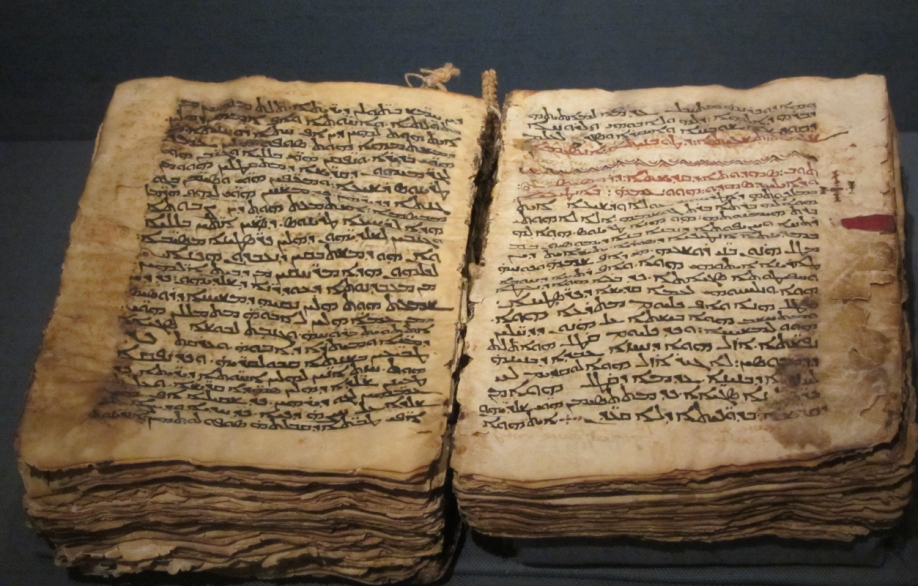
Before printing, texts were copied by hand. These handwritten documents are called manuscripts. The biblical authors’ original documents have not survived, so scholars study later copies, fragments, and ancient translations.
Copies sometimes differ. Many differences concern spelling or small details; others affect a passage more substantially. Textual criticism is the study of these copies to work out, as far as possible, the wording of the earlier text. “Criticism” here means careful analysis.
A footnote such as “other ancient manuscripts read…” signals a real textual question. It helps readers see the evidence rather than hiding it. The Dunham Bible Museum’s introduction to manuscripts explains this part of the Bible’s history.
What does “inspired by God” mean?
Christians believe God speaks through Scripture. Inspiration names that conviction about God’s work through human writing. The books still have distinctive voices, settings, and literary forms.
Christian traditions differ in how they explain inspiration and the Bible’s authority. They also differ about how Scripture relates to church tradition and how particular passages should be interpreted. Understanding a tradition’s view helps you follow its reasoning.
Taking the Bible seriously involves reading it carefully. Notice the setting, the language, and the kind of writing. Ask whether a passage describes something that happened or tells people what they should do. A story can describe harmful behavior without approving of it.
How do chapters and verses work?
Chapters and verse numbers are reference tools added after the writings were composed. They make a passage easy to locate, but a verse is not necessarily a complete thought.
John 3:16 means the Gospel of John, chapter 3, verse 16. Luke 10:25–37 means Luke, chapter 10, verses 25 through 37. In a title such as 1 Corinthians, the first number is part of the book’s name. It distinguishes that letter from 2 Corinthians.
Headings, study notes, maps, and cross-references in an edition help you read. They are editorial aids, so distinguish them from the biblical text itself.
Where should a newcomer begin?
You do not have to read from the first page to the last before you can understand anything. Choose a manageable passage and read it in context.
- To meet Jesus: begin with Who is Jesus?, then read a Gospel such as Mark or Luke.
- To encounter poetry: try our guide to Psalm 23, noticing its images and movement.
- To follow a story: try the good Samaritan and the conversation that introduces it.
- To understand a letter: use our letter-reading guide to ask about its sender, readers, and purpose.
Ask: What kind of writing is this? Who is speaking? What comes before and after it? What do I understand, and what would I need to learn more about?
Understanding the Bible is an ongoing practice. A thoughtful question is a beginning. Our starting guide can help you take the next step.
Where Christians read differently
Why do Christian Bibles have different books? Most Protestant Christians receive the shorter Old Testament collection associated with the Hebrew Bible. Catholics recognize additional books through Tradition, the faith handed down from the apostles. Orthodox communities emphasize the books received and read in worship, with some variation between churches. The difference concerns how churches recognize Scripture. The New Testament collection is shared across the Catholic, Eastern Orthodox, and major Protestant traditions. Compare the arguments →
What does it mean to call the Bible authoritative? Christians distinguish several questions here. Many evangelicals affirm inerrancy, meaning freedom from error in all Scripture teaches. Other Christians emphasize how God speaks authoritatively through writers shaped by their time and culture. Protestants generally treat Scripture as the final standard, while Catholic and Orthodox Christians read it within the faith handed down in the church. They differ about who has authority to settle questions of teaching. Views on inspiration do not automatically determine a person’s answer about tradition or literary interpretation. Compare the arguments →
How were the biblical books written? Traditional accounts often connect a book closely with the author it names or Christian tradition identifies. Other Christian scholars distinguish older material, later editing, and a writing’s final form, using vocabulary, historical references, and literary relationships as evidence. Neither approach has one identical answer for every book. Whether a book guides Christian belief and who wrote it are related questions, but each needs its own evidence and reasoning. Compare the arguments →
A question in the margin is a good place to begin.